
A Guide to Safe Intervention: How to Help When You Suspect Abuse
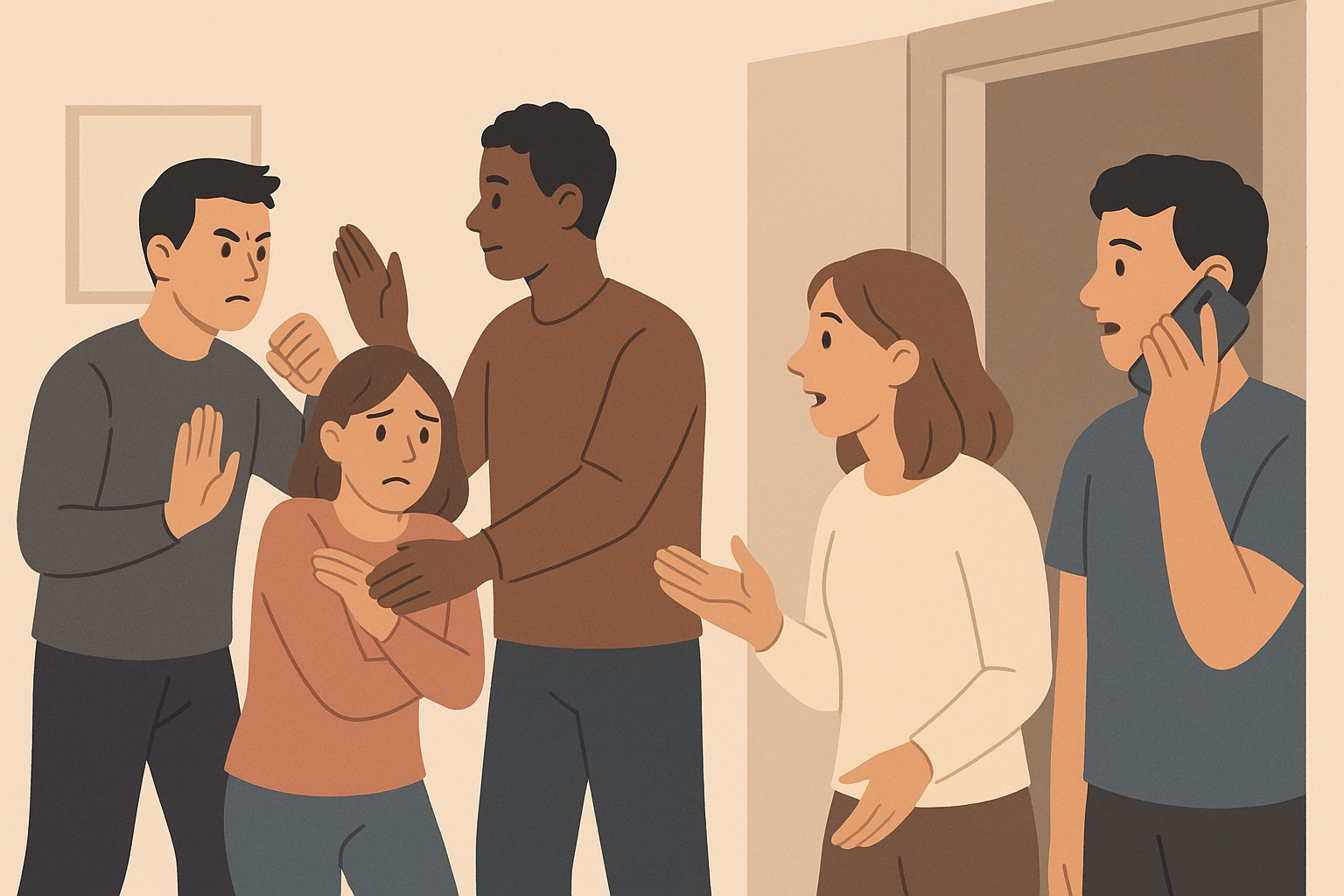
What Counts as a Safe Intervention?
A safe intervention is any action that aids a person in an abusive situation without escalating the immediate danger. It focuses on supporting the person experiencing abuse, not on confronting or "fixing" the abuser. Safe intervention methods are often subtle and indirect.
Indirect Intervention: This involves taking steps that don't put you in direct contact with the abuser. This is often the safest and most effective approach. Examples include:
Calling a professional hotline for advice.
Contacting law enforcement if you believe someone is in immediate danger.
Making a report to a local social services agency.
Direct Intervention (with Extreme Caution): This should only be attempted in non-physical situations and with careful thought. A direct intervention could be a conversation with the person at risk, away from the abuser. The goal is to express concern and offer help, not to push them to take specific action.
Safe Intervention | Unsafe Intervention |
Calling a hotline for professional advice | Confronting the abuser directly |
Talking to the person in a private, safe space | Intervening during a physical altercation |
Offering a safe place to stay | Demanding the person leave the relationship |
Calling 911 if there is a direct threat of violence | Posting about the abuse on social media |
Written by
Daniel Cho, JD
Family Lawyer · 18 years experience
Reviewed by
Lila Thompson, LMFT
Trauma-Focused Therapist
Last updated
September 21, 2025
Reviewed on
September 21, 2025
Review frequency
Every 6 months
Sources
Cite every factual statement with numbered superscripts (e.g., Emotional abuse often escalates.^1) and map them to the list below.
Replace these placeholder authorities with the exact citations used in the article before publishing.