
How New York’s Coercive-Control Statute (S.211A) Protects NYC Domestic-Violence Survivors — Complete Guide
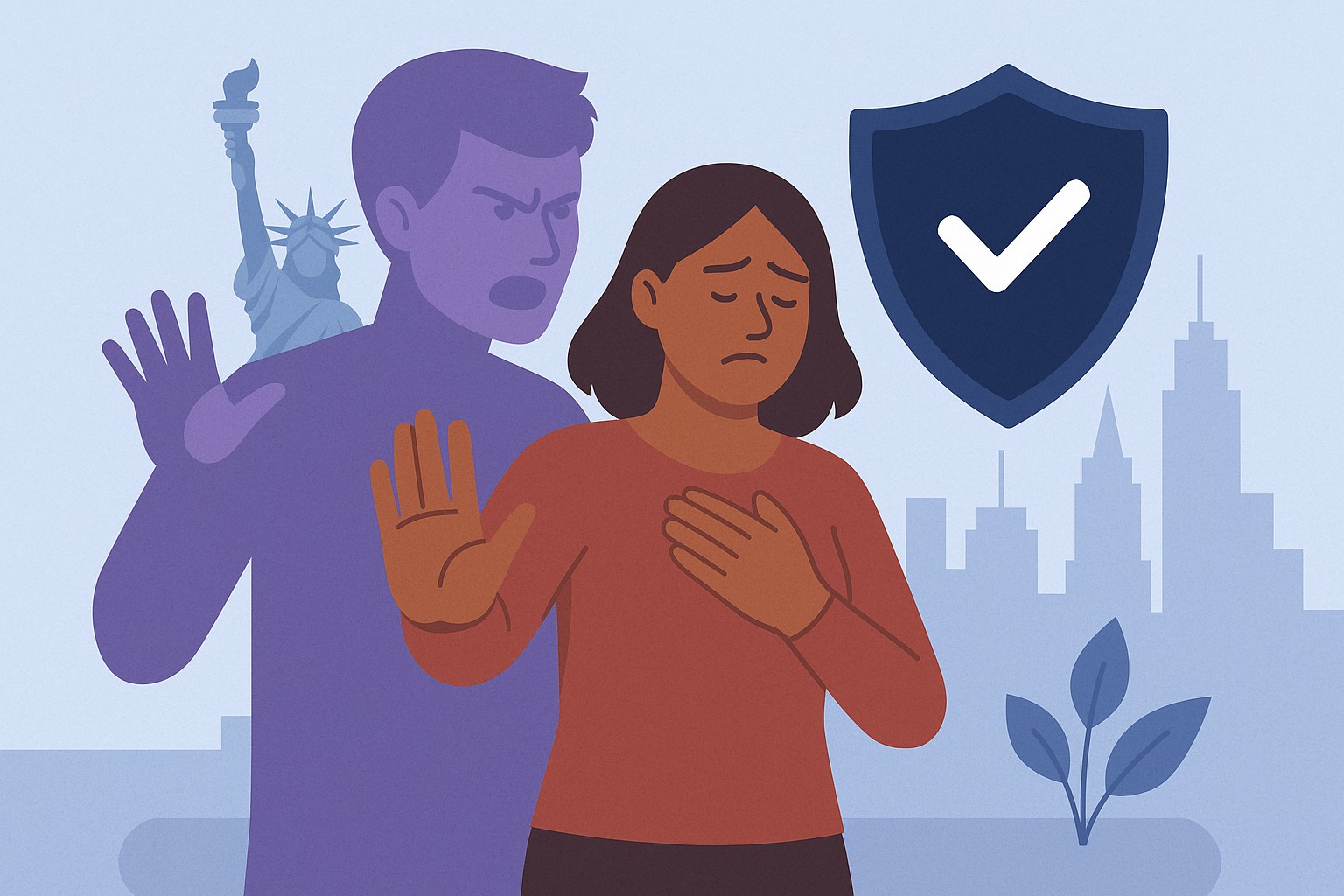
In 2025, New York took a groundbreaking step toward combating domestic abuse by passing the Coercive-Control Statute (S.211A). For the first time, survivors in New York City and across the state are legally protected not just from physical harm but also from a range of non-physical abuse tactics—including intimidation, surveillance, financial control, and isolation.
This guide explains the key provisions of the law, what coercive control looks like, how it can be proven in court, and the protections available to survivors under the new statute.
1. What Is Coercive Control?
Coercive control refers to a pattern of abusive behaviors used to dominate, isolate, and exploit a partner. Examples include:
- Monitoring your phone, email, or social media without consent
- Restricting your access to money or bank accounts
- Preventing you from seeing friends, family, or leaving the home
- Making threats to harm you, loved ones, or pets
- Controlling your daily activities, clothing, or diet
- Humiliating you in public or private
These behaviors create an environment of fear and dependency, even when no physical violence is present.
2. Overview of New York’s 2025 Coercive-Control Statute (S.211A)
The law recognizes coercive control as a form of domestic violence and allows survivors to seek legal remedies, including:
- Orders of Protection without the need to prove physical injury
- Consideration of coercive control evidence in child custody cases
- Enhanced penalties when coercive control occurs alongside physical abuse
- Access to support services funded by the state
Importantly, the statute broadens the legal definition of “domestic violence” to cover both current and former intimate partners, including those who never lived together.
3. How the Law Works in NYC Courts
Filing a Petition:
Survivors can file a petition in Family Court or seek protection through Criminal Court if charges are filed.
Evidence That Helps:
- Texts, emails, or call logs showing harassment or monitoring
- Bank statements documenting financial restrictions
- Witness statements from friends, coworkers, or neighbors
- Therapist or counselor records describing the abuse
- Personal journals detailing incidents and their impact
Court Considerations:
Judges will evaluate the pattern and cumulative effect of behaviors, rather than treating each act in isolation.
4. Why This Law Is Important for NYC Survivors
Before S.211A, many survivors who faced emotional or financial abuse without physical harm struggled to obtain legal protection. Now, NYC survivors have:
- Legal recognition of their experience
- Broader access to protective orders
- A stronger position in custody and divorce proceedings
- State-backed access to victim advocates and resources
5. How to Seek Help Under the New Law
- Contact an NYC domestic-violence hotline or legal aid group for free guidance
- Document all incidents, no matter how small
- Gather and securely store copies of evidence
- File a petition for an Order of Protection citing coercive control under S.211A
NYC Domestic Violence Hotline: Call 1-800-621-HOPE (4673) or text “SAFE” to 43961 (24/7, confidential)
Conclusion
New York’s 2025 Coercive-Control Statute is a game-changer for domestic-violence survivors in NYC. By recognizing and addressing patterns of psychological, emotional, and financial abuse, it gives survivors the legal tools to reclaim their safety, autonomy, and freedom. If you are experiencing coercive control, you now have a law designed to protect you—use it.
FAQs
1. What does the 2025 Coercive-Control Statute in New York cover?
It covers patterns of non-physical abuse, such as emotional, psychological, and financial control, and allows survivors to seek protective orders even without proof of physical harm.
2. Can I get an Order of Protection in NYC for coercive control without physical abuse?
Yes. Under S.211A, you can request an Order of Protection based solely on coercive control behaviors.
3. What kind of evidence is most effective in proving coercive control?
Texts, emails, financial records, witness statements, and professional documentation (e.g., therapist notes) are strong evidence.
4. Does the law apply to ex-partners?
Yes. The statute covers both current and former intimate partners, regardless of cohabitation history.
5. Can coercive control be considered in child custody cases?
Yes. Courts can consider evidence of coercive control when determining custody and visitation arrangements.
6. Where can I get help if I think I’m experiencing coercive control in NYC?
Contact the NYC Domestic Violence Hotline at 1-800-621-HOPE (4673) or text “SAFE” to 43961 for confidential support.
If you’d like, I can also create an internal linking structure so this post connects with your other NYC DVRO and legal rights guides, boosting both your SEO authority and reader engagement. That way, users reading this post can easily navigate to related resources without leaving your site.