
Documenting Abuse Like a Pro: Best Photo & Text-Capture Practices for San Diego DVRO Hearings
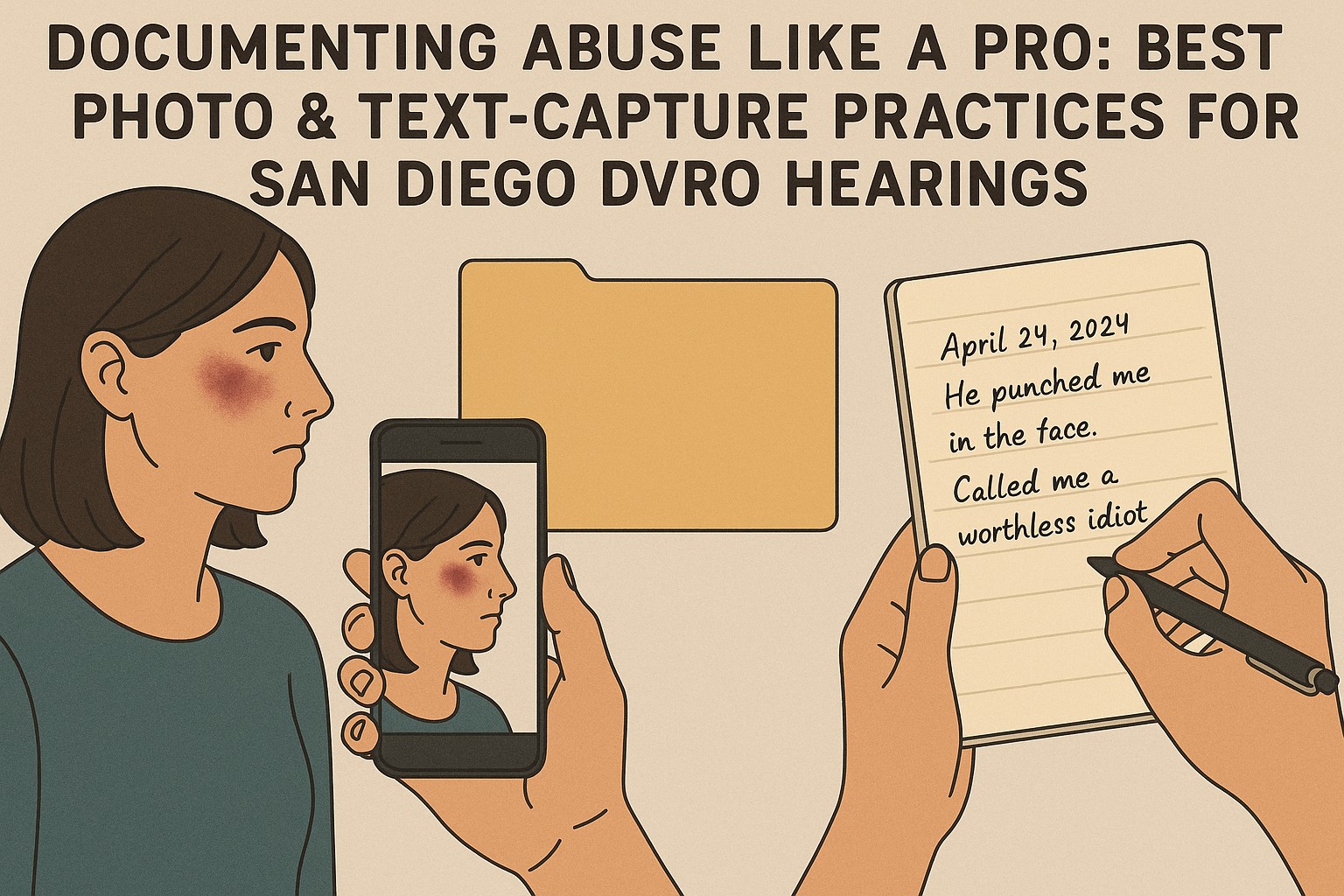
In the San Diego legal system, a Domestic Violence Restraining Order (DVRO) is a critical step toward safety. While a survivor's testimony is the most powerful tool in their arsenal, the evidence they present can make the difference between an order being granted or denied. This guide is a masterclass in preparing a "pro" evidence package for the San Diego Superior Court, teaching you the best practices for documenting abuse through photos, text messages, and more.
The Foundation: Why a San Diego Judge Needs Your Evidence ⚖️
Judges in the San Diego Superior Court are trained to look for patterns of abuse. Your evidence package serves as a verifiable timeline, substantiating your claims and providing an objective record of the abuse. A well-documented case makes it easier for a judge to understand the full scope of your situation and see past any attempts by the abuser to discredit your account.
Pro-Tips for Photographing Physical Evidence 📸
If you have physical injuries, documenting them correctly is paramount. Follow these tips to ensure your photos are "court-ready":
-
Act Quickly and Get Medical Care: The first step is always to seek medical attention. A medical record from a San Diego hospital or clinic is powerful, independent evidence.
-
Use Good Lighting and Context: Take photos in a well-lit area without a flash. Take a wide shot to show the injury's location on your body, followed by a close-up.
-
Include Scale and Date: In at least one photo, place a ruler or a coin next to the injury for scale. Ensure the photo's metadata includes the date and time, or take a picture of a newspaper or digital clock with the injury.
-
Preserve the Original: Never delete any of the photos, even if they aren't perfect. They are part of a complete record.
Pro-Tips for Capturing Digital Evidence (Texts & Social Media) 📱
Digital communication is often a goldmine for evidence of threats, harassment, and coercive control.
-
Screenshot with a Purpose: Take screenshots of every relevant text message, email, or social media post.
-
Include the "Four C's": For a screenshot to be most effective, it must show the Content of the message, the Contact (the sender and recipient), the Date, and the Time.
-
Capture the Full Conversation: It is often more powerful to screenshot entire conversations, not just individual messages. This helps a judge see a pattern of behavior over time.
-
Secure Your Files: Print out all relevant screenshots and also save them to a secure, private cloud storage service that the abuser cannot access.
The Final Package: Putting It All Together 📂
Once you have gathered your evidence, the final step is to organize it for the court.
-
The Rule of Three: Prepare three copies of your evidence package: one for the court, one for the abuser (which will be served by a third party), and one for yourself.
-
Organize and Index: Arrange your evidence in a binder or folder in chronological order. Create a simple index or table of contents that lists the type of evidence (e.g., "Photos of Bruises," "Texts from Abuser") and the dates it covers. This makes it easy for the judge to follow your story.
Frequently Asked Questions (FAQs)
1. Do I need a lawyer to prepare this evidence package?
While you do not legally need a lawyer, it is highly recommended. A legal aid organization in San Diego can help you prepare a professional and comprehensive package that meets all court requirements.
2. Is it okay if my photos aren't professional quality?
Yes. Your photos do not need to be professional. The most important things are that they are clear, in focus, and include the date and context to be easily understood by a judge.
3. How far back can I go to collect evidence?
You should collect evidence from as far back as you can to show a pattern of abuse. A DVRO case is often about a history of abuse, not just a single, recent incident.
4. Can I use screenshots from my old phone?
Yes. As long as the screenshots clearly show the message content, sender, date, and time, they are valid evidence. If possible, save them to a secure location before you get rid of the old phone.
5. What if my abuser deleted the evidence from their phone?
While this can make it more difficult, the evidence you have saved from your own device is still valid. Your testimony, supported by your preserved evidence, is the most important part of your case.
6. Where can I get help in San Diego to prepare my evidence package?
The San Diego Family Justice Center and organizations like the YWCA of San Diego County and Legal Aid Society of San Diego provide free legal and advocacy services for survivors.