
What Happens After Reporting to the Police? Understanding the Criminal Court Process in Ontario
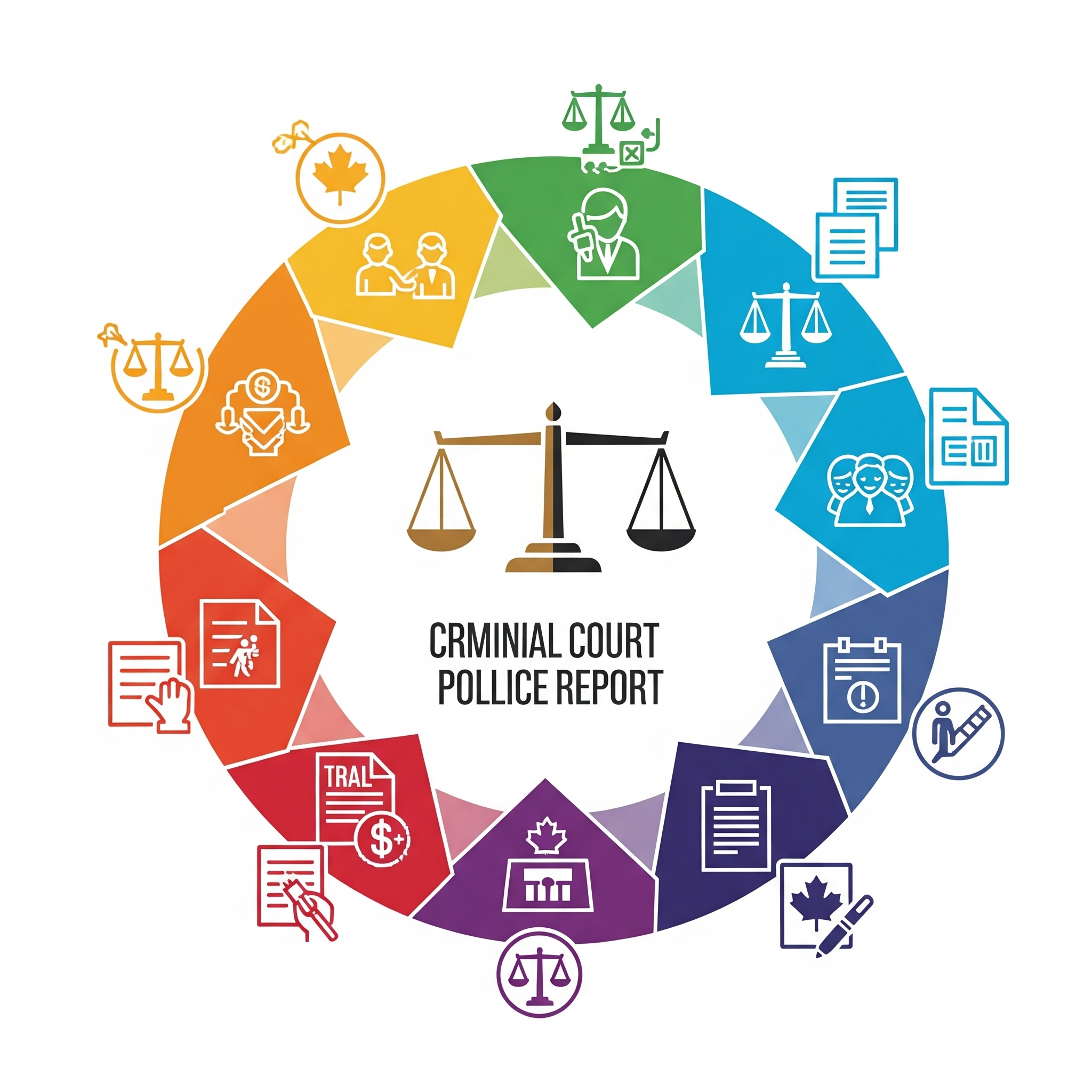
⚖️ What Happens After Reporting to the Police?
Understanding the criminal court process can feel daunting after you’ve reported domestic violence or harassment to police. Though it may seem overwhelming, knowing what to expect at each stage can help you feel more prepared and supported. This guide outlines the key steps—from the initial investigation to a potential trial—as well as your role as a survivor and where to find help.
Step 1: Police Investigation and Charges
Once you call or meet with officers, they will gather your statement and any evidence. Under Ontario’s mandatory charging policy, police may lay charges if they believe an offence occurred, even if you prefer not to press charges. The accused may be arrested on the spot or released with bail conditions such as no contact. Officers complete a report, assign a case number and forward the file to the Crown attorney.
Step 2: Crown Attorney Takes Over
The Crown attorney reviews police materials and decides whether the prosecution should continue. This decision rests with the Crown, not you, although you may be contacted for clarification or additional information. You will be notified of upcoming court dates, but you do not direct the proceedings. Communication with victim services or the Crown’s office can keep you informed.
Step 3: Bail and No‑Contact Conditions
If the accused is released before trial, a Justice of the Peace sets bail conditions to protect you and your family. Typical conditions include no direct or indirect contact, staying away from your home, workplace or school, and surrender of weapons. Any breach is a separate criminal offence and should be reported immediately to police.
Step 4: First Court Appearances
The first appearance is often brief. The accused attends to confirm identity and hear charges. You are not required to be present. The Crown and defence may negotiate a plea resolution or schedule future court dates. If you are needed as a witness, the court will serve you with a subpoena and provide information on how to prepare.
Step 5: Trial (If No Plea Agreement)
If no agreement is reached, the matter proceeds to trial. You may be called to give evidence under oath as a Crown witness. Support is available through the Victim/Witness Assistance Program, trauma‑informed legal clinics and court preparation meetings to help you understand procedures and manage stress.
Your Role as a Survivor
In criminal proceedings you serve as a witness rather than a party. You have no control over the Crown’s decisions, but you can share your views with the prosecutor. Throughout, you are entitled to safety planning, legal advice and counselling services.
What If You Want to Withdraw Charges?
Once the Crown has laid charges, only the Crown can discontinue them. If you feel pressured to recant or unsafe, inform the prosecutor or a support worker without delay. You are protected from intimidation and coercion under the law.
Support Services Along the Way
• Victim Services Ontario – safety planning, emergency housing and court escorts• Victim/Witness Assistance Program – guidance through court processes and access to supports• Legal Aid Ontario – free legal advice and representation if eligible• Women’s shelters and community legal clinics – confidential counselling and advocacy
Summary: What to Expect After Reporting
• Police lay charges based on evidence and policy• The Crown attorney evaluates and directs the case• Bail conditions protect you before trial• Court appearances progress from first hearing to trial or plea• You participate as a witness, with support available at every stage
Ontario Resources
• Victim Support Line (Ontario) – 1‑888‑579‑2888• Legal Aid Ontario – 1‑800‑668‑8258• Assaulted Women’s Helpline – 1‑866‑863‑0511• Barbra Schlifer Clinic – legal and trauma support• Luke’s Place – family law assistance for survivors• 211 Ontario – connection to local services and shelters