
Creating a Personalized Safety Plan: Steps to Take While Living With an Abuser
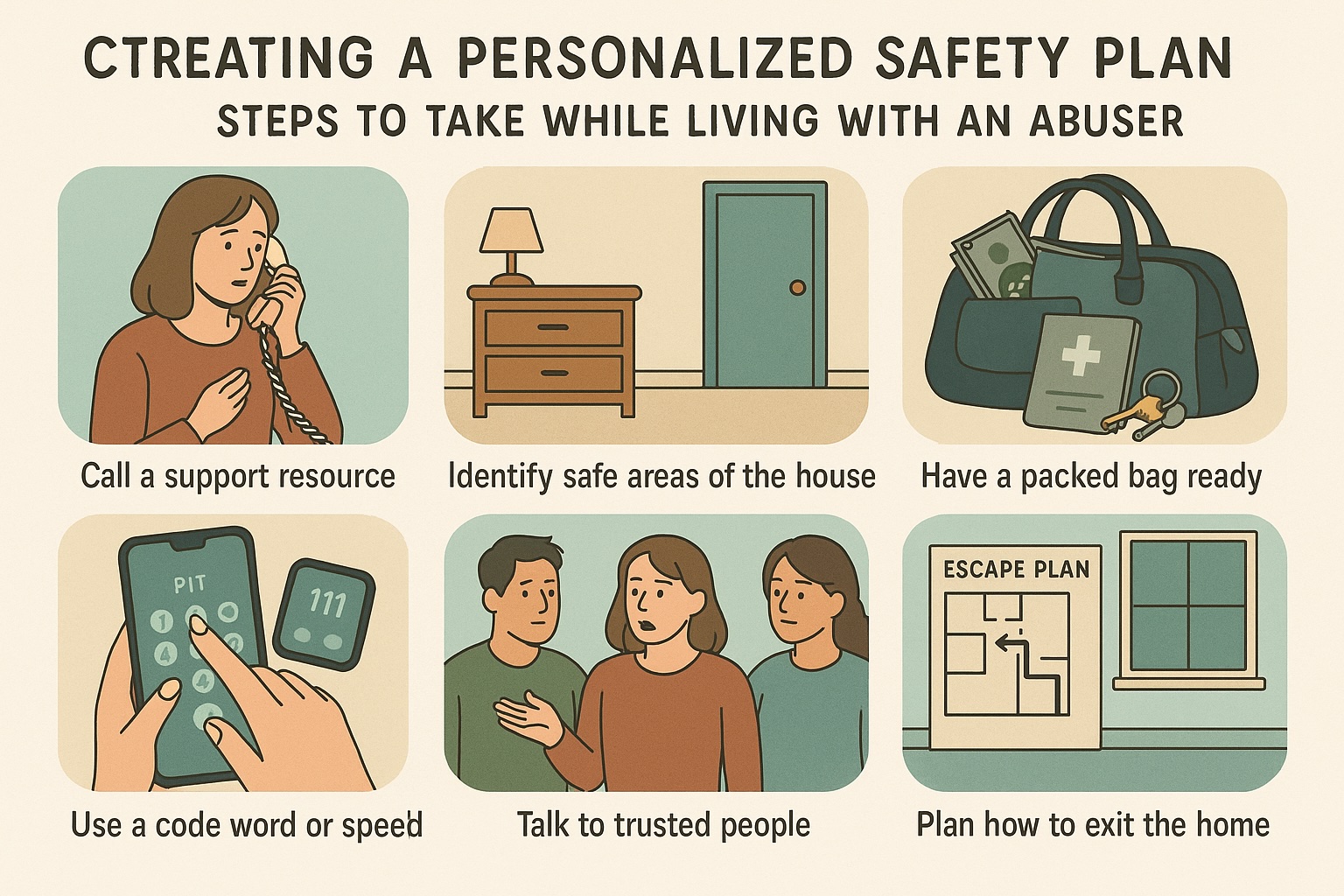
If you’re living with someone who is abusive, you may not feel safe—but you may also feel unable to leave. That’s okay. A safety plan is a powerful tool you can use to stay as safe as possible right now, while preparing for the future.
This guide walks you through practical safety planning while still inside the relationship.
🧠 What Is a Safety Plan?
A safety plan is a personalized set of actions you can take to:
Reduce your risk of harm
Prepare for emergencies
Plan for safe exits when you’re ready
Protect yourself, your children, and your essentials
You don’t have to wait for things to get worse. Safety planning is a way to take back control—step by step.
🏠 Step 1: Make Your Home Safer
Identify safe rooms with exits (avoid kitchens or bathrooms where weapons may be present).
Memorize where doors, windows, and escape routes are.
Keep a spare set of keys hidden in a safe but accessible spot.
If possible, install door stoppers, motion lights, or silent alerts.
Store a packed bag in a trusted location (friend’s home, car trunk, or workplace).
🗂️ Step 2: Prepare Important Documents & Essentials
Keep copies of:
ID (yours and your children’s)
Health cards and passports
Bank and legal documents
Restraining order or court documents (if applicable)
Include essentials:
Medications
Cash or prepaid cards
Extra phone charger and contacts list
Clothing and hygiene supplies
Tip: Back up important info digitally on an encrypted USB or secure cloud.
📱 Step 3: Use Technology Safely
Turn off location sharing (Find My iPhone, Google Maps, etc.).
Use a secure email address your abuser doesn’t know.
Consider a secret phone if it’s safe to have one.
Avoid shared devices or cloud accounts.
Use Incognito/Private mode when searching for help.
👨👩👧 Step 4: Plan for Children’s Safety
Teach kids a code word for when they need to hide or call for help.
Practice safe routes and who to go to (a neighbor, teacher, etc.).
Pack a small bag with comfort items and essentials for them.
If safe, inform teachers, daycare staff, or trusted adults.
🧭 Step 5: Know Where to Go
Make a list of safe places:
A trusted friend’s house
Local women’s shelter (addresses are confidential)
24/7 crisis lines or police stations
Arrange a signal plan with someone you trust (e.g., “If I text [word], call help”).
🗣️ Step 6: Who Can You Talk To?
Identify at least one safe person who knows your situation.
Tell them what to do in an emergency.
You can also talk anonymously to:
Assaulted Women’s Helpline: 1-866-863-0511
211 Ontario: For local shelters & support
Barbra Schlifer Clinic: Legal and counselling help for survivors
📌 Summary
✅ Identify escape routes and safe areas
✅ Keep documents, cash, and essentials accessible
✅ Use a tech safety checklist
✅ Teach children emergency steps
✅ Know who to call and where to go
✅ Remember: You’re not alone—support is out there
Frequently Asked Questions (FAQ)
Q1: Do I have to leave right away to make a safety plan?
No. Safety planning helps even if you’re not ready to leave. It’s about reducing risks where you are and preparing for when the time comes.
Q2: What if my abuser monitors my phone or computer?
Use a trusted friend’s device, a public library computer, or a prepaid phone if possible. Always clear browsing history and use private mode.
Q3: How can I protect my children if they’re too young to understand a plan?
Focus on teaching them safe behaviors (e.g., go to a neighbor, hide in a safe room). Pack essentials for them in advance.
Q4: Where can I go if I leave suddenly and have no money?
Shelters in Ontario provide free emergency housing, food, and counselling. Call 211 Ontario to be connected to services 24/7.
Q5: Will calling the police put me at more risk?
It depends on your situation. If you are in immediate danger, call 911. For ongoing concerns, consider talking to a shelter worker or legal clinic first to create a response plan.
Q6: Can I get legal help without money?
Yes. Legal Aid Ontario may cover survivors of abuse. Clinics like the Barbra Schlifer Clinic also provide free legal support.