
AICPA backs SAFE Act to aid tax filing for domestic abuse survivors
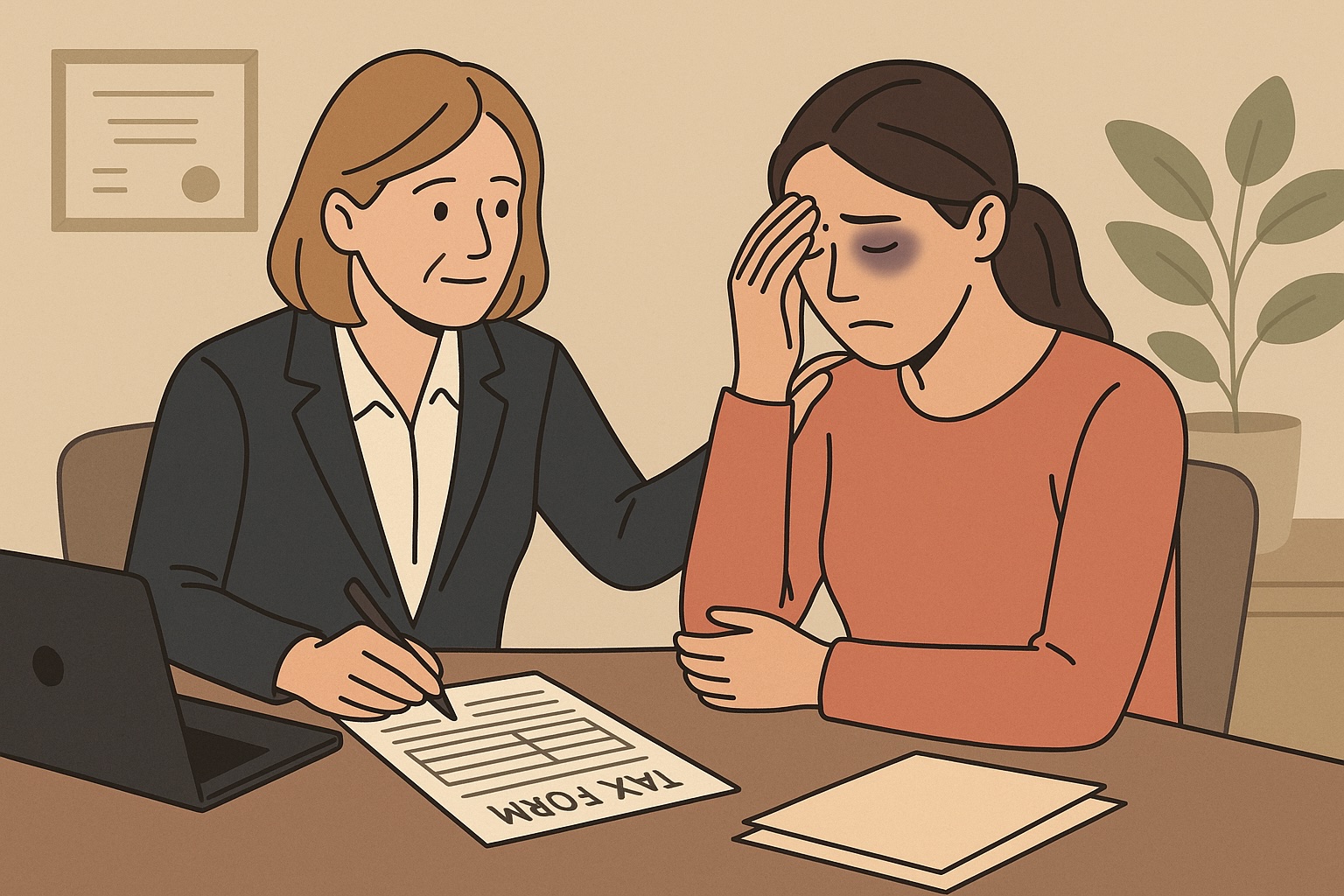
WASHINGTON – The American Institute of CPAs (AICPA), the world’s largest member association representing the accounting profession, announced its official support this week for the Spousal ABUSE Fairness and Enforcement (SAFE) Act of 2025. The bipartisan bill is aimed at providing critical tax relief for survivors of domestic violence who have been saddled with joint tax debt by an abusive partner.
The legislation, introduced by Sen. Jane Miller, D-Calif., and Sen. Mark Roberts, R-Ohio, seeks to reform the "innocent spouse relief" provisions within the Internal Revenue Code, which advocates have long argued are insufficient to protect victims of financial abuse.
The Problem: When Tax Law Becomes a Weapon
For many survivors, financial abuse is a primary tool of control. An abuser can weaponize the tax system by filing a joint return, underreporting income or claiming fraudulent deductions without the other spouse's knowledge, and then leaving the victim legally liable for half of the resulting tax debt, interest, and penalties.
While the IRS has "innocent spouse relief" provisions, the current process can be difficult for survivors to navigate. The burden of proof to demonstrate they were unaware of the fraud can be high, and the strict two-year time limit to apply for relief is often an insurmountable barrier for someone who is still in crisis or has just recently found safety.
The Solution: Key Provisions of the SAFE Act
The SAFE Act proposes several common-sense reforms to address these gaps and shield survivors from further victimization by the tax system. Key provisions include:
- Lowering the Burden of Proof: The Act would create a "rebuttable presumption" of eligibility. If a survivor provides evidence of abuse (such as a restraining order, police report, or a letter from a shelter), the burden would shift to the IRS to prove the survivor was a willing participant in the tax fraud, rather than forcing the survivor to prove their own innocence.
- Expanding the Window to Apply: Recognizing that it can take years for a survivor to achieve the stability needed to address complex financial issues, the SAFE Act would extend the application period for innocent spouse relief from two years to five years after the date of separation or divorce.
- Creating a Specialized IRS Unit: The bill mandates the creation of a dedicated task force within the IRS. This unit's staff would receive specialized training in the dynamics of domestic violence and trauma-informed practices to handle these sensitive cases with the necessary expertise and compassion.
- Halting Collection Activities: Upon receipt of a SAFE Act application supported by evidence of abuse, the IRS would be required to immediately pause all collection activities (like wage garnishments or bank levies) against the survivor while the case is being reviewed.
AICPA's Endorsement Lends Key Support
The backing of the AICPA is a significant boost for the legislation, lending technical credibility and a powerful lobbying voice to the cause.
In a letter sent to the bill's sponsors, AICPA President and CEO Evelyn Reed wrote, "The tax code should never be a weapon used by abusers. The SAFE Act provides common-sense reforms that will protect vulnerable individuals from being victimized twice—first by their abuser, and then by a tax system that fails to recognize their circumstances. We urge Congress to pass this vital legislation swiftly."
The SAFE Act has been referred to the Senate Finance Committee for review. Supporters, including the National Network to End Domestic Violence, are hopeful that the strong bipartisan sponsorship and influential endorsements will provide the momentum needed for a committee hearing this fall. The bill represents a critical step in removing one of the most significant barriers survivors face in their journey toward long-term economic independence and safety.